

Abstract
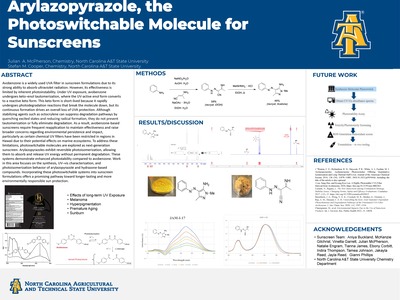
Avobenzone is a widely used UVA filter in sunscreen formulations due to its strong ability to absorb ultraviolet radiation. However, its effectiveness is limited by inherent photoinstability. Under UV exposure, avobenzone undergoes keto–enol tautomerization, where the UV-active enol form converts to a reactive keto form. This keto form is short-lived because it rapidly undergoes photodegradation reactions that break the molecule down, but its continuous formation drives an overall loss of UVA protection. Although stabilizing agents such as octocrylene can suppress degradation pathways by quenching excited states and reducing radical formation, they do not prevent tautomerization or fully eliminate degradation. As a result, avobenzone-based sunscreens require frequent reapplication to maintain effectiveness and raise broader concerns regarding environmental persistence and impact, particularly as certain chemical UV filters have been restricted in regions in Hawaii due to their potential effects on marine ecosystems. To address these limitations, photoswitchable molecules are explored as next-generation sunscreen. Arylazopyrazoles exhibit reversible photoisomerization, allowing them to absorb and release UV energy without permanent degradation. These systems demonstrate enhanced photostability compared to avobenzone. Work in this area focuses on the synthesis, UV–vis characterization, and photoisomerization behavior of arylazopyrazole and hydrazone-based compounds. Incorporating these photoswitchable systems into sunscreen formulations offers a promising pathway toward longer-lasting and more environmentally responsible sun protection.
Preview
Publication Date
Spring 2026
Faculty Mentor
Dr. Stefan M. Cooper
Department
Chemistry Department
Disciplines
Chemistry
Keywords
Arylazopyrazole, Sunscreens, Photoswitchable, UV filters